
Curb Appeal Tips That Support Your Local Workforce

Improving curb appeal while supporting local workforce development means selecting exterior projects that create real jobs, build transferable skills, and leave your neighborhood stronger than you found it. This is not standard home improvement advice. The most effective approach links beautification directly to local hiring, apprenticeship programs, and community organizations already doing the work. Programs like NYC’s GROW initiative and Tacoma’s LEAP model prove that property upgrades and workforce development are not competing goals. Manycolorswi was built on exactly this idea: that home improvement projects should benefit both the property owner and the people doing the work.
What curb appeal projects best support local workforce initiatives?
The projects that do the most for your local workforce are the ones that create ongoing roles, not just a single day of labor. Green infrastructure and nature-based solutions installed curbside fit this model perfectly. They require regular maintenance, which means repeatable employment rather than one-time gigs.
Rain gardens and green infrastructure
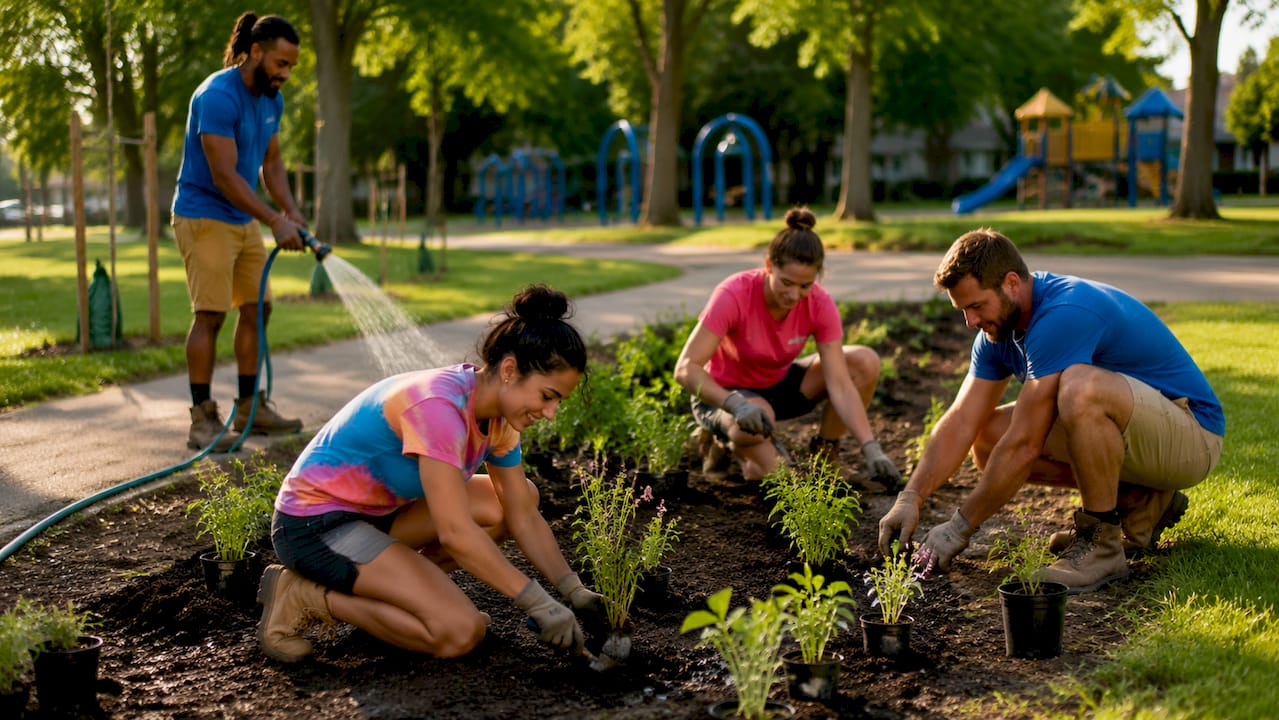
Rain gardens are one of the strongest examples of curb appeal tied to workforce development. NYC’s GROW program trains an 18-person local crew to maintain over 1,000 curbside rain gardens across Brooklyn and Queens, backed by a $4.5 million, three-year pilot involving the NYC Department of Environmental Protection and The Doe Fund. That model proves that a single green infrastructure investment can sustain multiple local careers over years, not weeks. Converting lawn space to native plant rain gardens also reduces household water use by 50–70%, adding real environmental value alongside the workforce benefit.
High-impact exterior upgrades
Not every project needs to be green infrastructure. Garage door and front entry replacements deliver the highest return on investment for curb appeal and can be executed entirely by local contractors. Porch updates and siding improvements also rank highly for buyer perception and property value. The key is intentional hiring: specifying local labor in your contractor agreement rather than leaving it to chance.
Here are the project types that align best with local workforce goals:
Curbside rain gardens and native plantings with ongoing maintenance contracts for local crews
Exterior painting and siding using contractors with apprenticeship programs or social mission hiring
Garage door and front entry upgrades sourced and installed by local tradespeople
Porch and walkway improvements that include training opportunities for entry-level workers
Lawn care and seasonal maintenance structured as recurring roles rather than one-time jobs
Pro Tip: When you hire a contractor, ask directly whether they employ apprentices or partner with any workforce development programs. That one question separates transactional vendors from community-invested ones.
How do you plan curb appeal projects that prioritize local hiring?
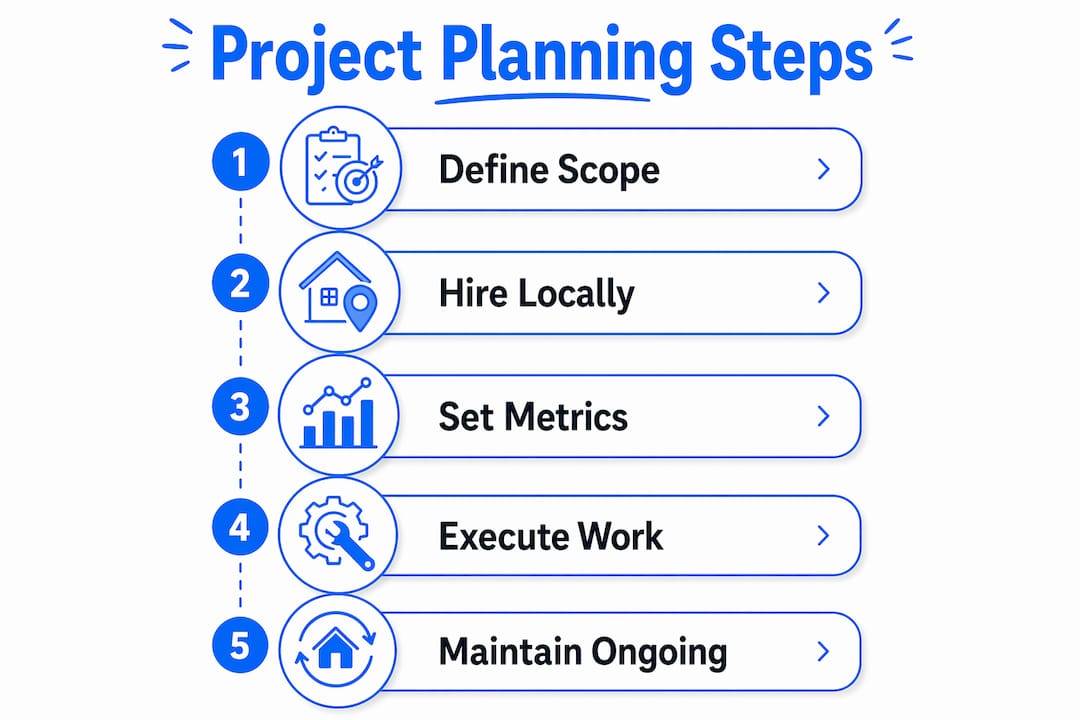
Planning a project with local workforce goals requires more structure than a standard renovation. You need to set measurable targets before the first shovel hits the ground.
Tacoma’s LEAP program is the clearest model available. It mandates 15% of labor hours on public projects be performed by local hires or apprentices, with an additional 15% apprentice requirement for contracts over $1 million. Prime contractors must submit utilization plans before construction begins. That structure turns a vague commitment into a contractual obligation. You can apply the same logic to private projects by writing local hire percentages into your contractor agreements.
Follow these steps to set up your project correctly:
Define your local hire target. Set a specific percentage of labor hours for local residents or apprentices before you select a contractor. A 15–20% threshold is a proven starting point based on Tacoma’s LEAP model.
Select contractors with social missions. Look for companies that partner with workforce development organizations, run apprenticeship programs, or hire from underserved populations. Home repair companies with social missions are more common in 2026 than most homeowners realize.
Check permits and utilities early. Green infrastructure projects require utility locates (call 811), soil percolation tests, and sometimes county encroachment permits. Early coordination on permits prevents costly delays that can derail both your timeline and your workforce partners’ schedules.
Partner with community organizations. Connect with local workforce boards, community colleges, or nonprofits that place trainees. These organizations often have pre-vetted candidates ready to work.
Document outcomes. Track labor hours by worker category. This data matters when applying for grants and when evaluating whether your project delivered real community benefit.
Pro Tip: Local workforce programs produce the best results when treated as long-term partnerships focused on career pathways, not one-time hiring transactions. Build that relationship before the project starts.
Here is a simple planning framework to keep your project on track:
Planning Stage | Key Action | Workforce Goal |
Pre-design | Define project scope and labor budget | Set local hire percentage target |
Contractor selection | Vet for apprenticeship or social mission | Confirm workforce development partnerships |
Permitting | File utility locates and encroachment permits | Avoid delays that disrupt crew schedules |
Execution | Track labor hours by worker category | Verify local hire thresholds are met |
Post-project | Document outcomes and maintenance plan | Structure ongoing roles for local workers |
What grants can fund curb appeal projects with workforce goals?
Grant funding can cover a significant share of your project costs, but it comes with conditions that shape your entire project design. Madison, Wisconsin’s facade improvement program offers up to $50,000 in matching funds for exterior upgrades including painting, doors, windows, and signage. The program requires a 1:1 match, meaning you contribute dollar for dollar. Projects must also start and finish within defined windows, often as short as 120 days from approval.
Grant programs are not just money. They are a governance layer. Grant conditions constrain project scope, define eligible elements, and set timelines that become your project management deadlines. Treat them as such from day one.
Grant Type | Typical Match Requirement | Common Eligible Elements | Workforce Tie-In |
Facade Improvement Grant (e.g., Madison, WI) | 1:1 matching funds | Painting, doors, windows, signage | Specify local contractor hiring in application |
Green Infrastructure Grant | Varies by program | Rain gardens, permeable paving, native plants | Maintenance crew employment built into scope |
Community Development Block Grant (CDBG) | Often no match required | Broad exterior improvements | Local hire requirements common in CDBG contracts |
Apply for grants before you finalize your project design. The eligible elements list will tell you exactly which improvements qualify, and the timeline requirements will dictate your contractor selection process. Missing a grant deadline because your contractor was not ready is one of the most common and avoidable project failures.
How do you avoid the most common pitfalls in these projects?
The biggest mistake homeowners and property managers make is treating workforce support as an add-on rather than a design requirement. Projects built around one-time cosmetic work create no lasting employment. Sustainable workforce development requires repeatable maintenance tasks built into the project from the start, such as rain garden care, seasonal planting, and regular exterior upkeep.
Watch for these specific pitfalls:
Skipping utility locates. Green infrastructure projects that hit unmarked utility lines face project shutdowns, fines, and contractor liability. Call 811 before any ground is broken.
Vague local hiring language. Saying you “prefer local workers” is unenforceable. Write specific percentages into contracts, modeled on Tacoma’s LEAP standard.
Ignoring grant timelines. A 120-day completion window is not flexible. If your contractor cannot commit to that schedule, find one who can before you accept the grant.
Choosing aesthetics over maintenance planning. A beautiful rain garden that no one maintains becomes a liability within two seasons. Budget for ongoing care and assign it to a local crew from day one.
Overlooking program compliance. If your grant or workforce program has reporting requirements, missing a submission can trigger clawback provisions. Assign one person to own compliance tracking.
Pro Tip: Structure at least one recurring maintenance contract as part of every exterior project. That single decision converts a one-time job into a career pathway for a local worker.
Key takeaways
Curb appeal projects deliver the greatest community value when local hiring, apprenticeship targets, and ongoing maintenance roles are built into the project design from the start, not added as afterthoughts.
Point | Details |
Choose projects with ongoing roles | Rain gardens and green infrastructure create repeatable local jobs, not just one-time work. |
Set measurable hiring targets | Write specific local hire percentages into contracts, using Tacoma’s 15% LEAP standard as a benchmark. |
Plan permits and utilities early | Utility locates and encroachment permits must be filed before ground is broken to avoid costly delays. |
Treat grants as project governance | Matching requirements, eligible elements, and 120-day timelines shape your entire project scope and budget. |
Partner with workforce organizations | Community-based organizations provide pre-vetted workers and turn transactional hiring into career development. |
What i’ve learned coordinating these projects firsthand
Most articles on curb appeal stop at aesthetics. They tell you to paint the door, replace the garage door, and add some landscaping. That advice is not wrong. It is just incomplete.
What I have seen running projects through Manycolorswi is that the difference between a good exterior renovation and a genuinely impactful one comes down to who you hire and how you structure the work. When we bring in workers who are rebuilding their lives, the project is not just about the property. It is about what that job means to the person doing it. That changes how the work gets done.
The workforce development angle is not charity. It is good project design. Workers who are invested in a community take more care with the work. They show up. They ask questions. They come back for the next job. That reliability is worth more than the marginal cost savings of hiring whoever is cheapest.
The other thing I would push back on is the idea that social mission hiring is complicated. It is not. You call a company like Manycolorswi, you ask about their hiring model, and you make a decision. The community impact of home repair is real and measurable. You just have to choose it deliberately.
My honest advice: stop treating curb appeal and workforce support as separate goals. The best projects I have been part of did both at the same time, and neither suffered for it.
— Ricco
How Manycolorswi helps you boost curb appeal and support local jobs
Manycolorswi was built specifically to connect exterior home improvement with workforce development for people who need a second chance. Every project the company takes on, from exterior painting and lawn care to flooring and drywall, is staffed by workers who are trained, supported, and invested in the outcome.
When you hire Manycolorswi, you are not just getting a contractor. You are choosing a company whose entire model is built around the idea that community-focused home improvement creates lasting value for both property owners and the people doing the work. If you want to enhance your property’s exterior while putting real dollars into local workforce development, explore what Manycolorswi offers and see how your next project can do more than just look good.
FAQ
What does it mean to improve curb appeal supporting local workforce?
It means selecting exterior home improvement projects that intentionally hire local workers, apprentices, or workforce development program participants. The goal is to enhance property value while creating real employment and skills opportunities in your community.
Which curb appeal projects create the most local jobs?
Green infrastructure projects like rain gardens create the most sustained local employment because they require ongoing maintenance roles. NYC’s GROW program demonstrates this by employing an 18-person local crew to maintain over 1,000 curbside rain gardens across multiple neighborhoods.
How do i find contractors who support local workforce goals?
Look for contractors that partner with workforce development organizations, run apprenticeship programs, or hire from underserved populations. Companies like Manycolorswi are built around this model and can deliver quality exterior work while supporting community employment.
Can grants cover curb appeal projects with workforce requirements?
Yes. Programs like Madison’s facade improvement grant offer up to $50,000 in matching funds for exterior upgrades. Some grants also allow or require local hiring provisions, which you can build into your contractor agreements to satisfy both funding and workforce goals.
Why hire local contractors instead of national chains?
Local contractors keep dollars circulating in your community, are more likely to employ neighborhood residents, and often have stronger accountability to local standards. Hiring local contractors also supports the tax base and workforce pipeline that your neighborhood depends on long after the project is finished.
Recommended
Comments