
Why Invest in Socially Responsible Remodeling

Socially responsible remodeling is the practice of renovating homes using eco-friendly materials, ethical labor, and energy-efficient systems to increase property value, cut long-term costs, and support community wellbeing. Homeowners and property investors who understand why invest in socially responsible remodeling gain a measurable edge: sustainable renovations reduce energy use by 25–40% and can lift resale value by 5–15%. Beyond the numbers, this approach draws on standards like ENERGY STAR, low-VOC material specifications, and Passive House retrofit principles to deliver healthier, more durable homes. The industry term for this practice is “green remodeling,” and it covers everything from solar installations to formaldehyde-free cabinetry.
Why invest in socially responsible remodeling for property value?
Green remodeling delivers a clear financial return. Sustainable home renovations cost 5–15% more upfront but offset that premium through lower utility bills, reduced maintenance, and protection from energy price swings. That tradeoff shifts quickly in your favor when you look at the numbers across a 10-year horizon.
Specific upgrades carry specific payoffs. Energy-efficient windows save 10–25% on heating and cooling costs annually. LED lighting cuts electricity consumption by 75% compared to incandescent bulbs. Solar installations save $600–$1,200 per year and eliminate 3–4 tons of CO2 annually. Each of these upgrades compounds over time, making the initial investment look smaller every year.
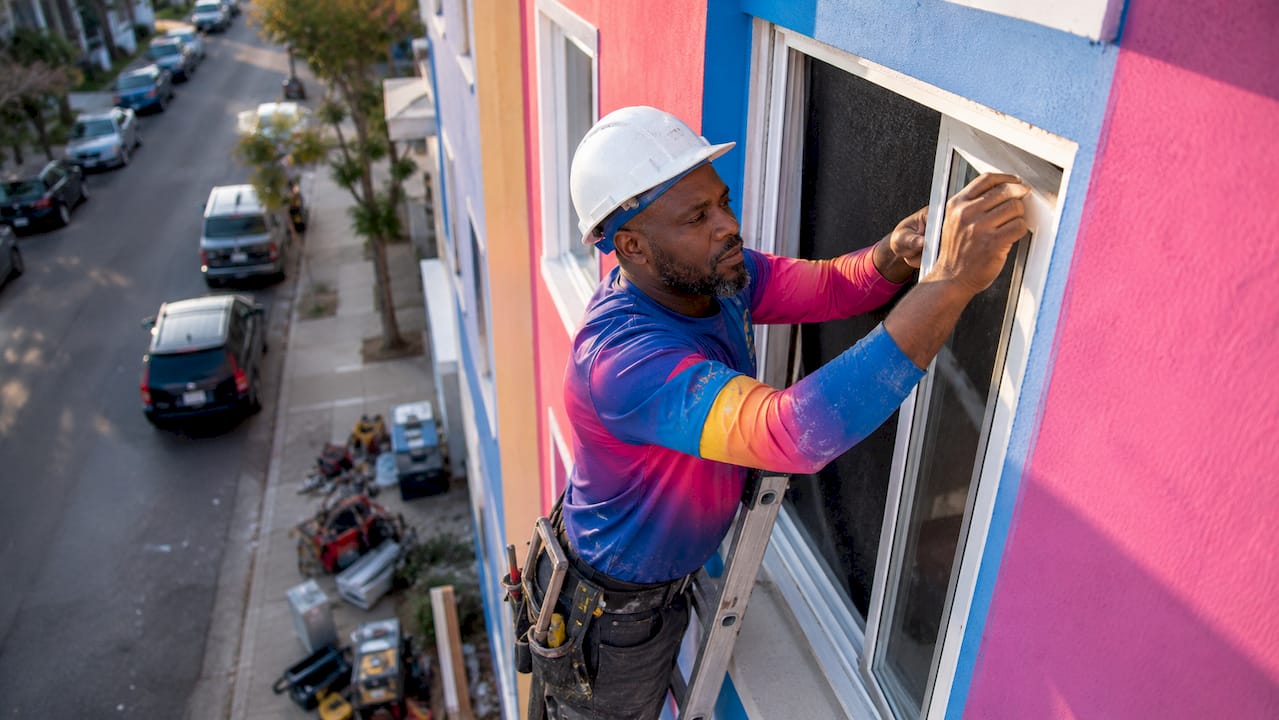
Resale value is the other side of the equation. Buyers in 2026 actively search for homes with documented energy performance. Documenting sustainability performance with digital tools can justify higher asking prices and shorten listing times. That means your remodel pays you twice: once through lower bills while you live there, and again when you sell.
Upgrade | Upfront Cost Range | Annual Savings | Resale Impact |
Energy-efficient windows | $300–$1,000 per window | 10–25% on HVAC | Moderate increase |
LED lighting conversion | $200–$800 whole home | 75% electricity reduction | Minor increase |
Solar panel installation | $15,000–$25,000 | $600–$1,200/year | Strong increase |
Low-VOC paint and finishes | $50–$150 premium | Reduced maintenance | Health premium |
Pro Tip: Start with an energy audit before spending on any single upgrade. A certified auditor identifies your home’s biggest thermal weak points, so your first dollar goes to the highest-impact fix rather than a cosmetic improvement.
How does responsible remodeling affect health and the environment?
Material choices inside your home have a direct effect on the air you breathe every day. Low-VOC paints and formaldehyde-free cabinetry reduce toxic off-gassing, which is especially important for children, elderly occupants, and anyone with respiratory conditions. Indoor air quality is a benefit of green remodeling that most homeowners underestimate until they experience the difference firsthand.
The environmental benefits extend well beyond your property line. Consider what responsible remodeling eliminates or reduces:
Carbon emissions: Decarbonization retrofits, electric heat pumps, and solar systems replace fossil fuel dependence and cut a home’s carbon footprint significantly.
Landfill waste: Deconstruction over demolition salvages usable materials, reduces landfill volume, and can generate tax benefits from material donations.
Toxic material exposure: Replacing older finishes, adhesives, and insulation with certified alternatives removes legacy pollutants from your living environment.
Water waste: Low-flow fixtures and greywater systems reduce household water consumption without sacrificing comfort.
The social dimension matters too. Decarbonization retrofits for affordable housing improve community resilience and deliver measurable health and emotional benefits to marginalized populations. When you choose responsible remodeling, you participate in a broader shift toward housing that serves people rather than depleting them.
Pro Tip: Ask your contractor for Material Safety Data Sheets on every product going into your home. If they cannot produce them, that is a signal to find a contractor who can.
Conventional remodeling vs. socially responsible approaches
The most common misconception about green remodeling is that it costs dramatically more and delivers the same result. The reality is more nuanced. Conventional remodeling optimizes for lowest upfront cost and fastest completion. Socially responsible remodeling optimizes for lifecycle value, which is a fundamentally different calculation.
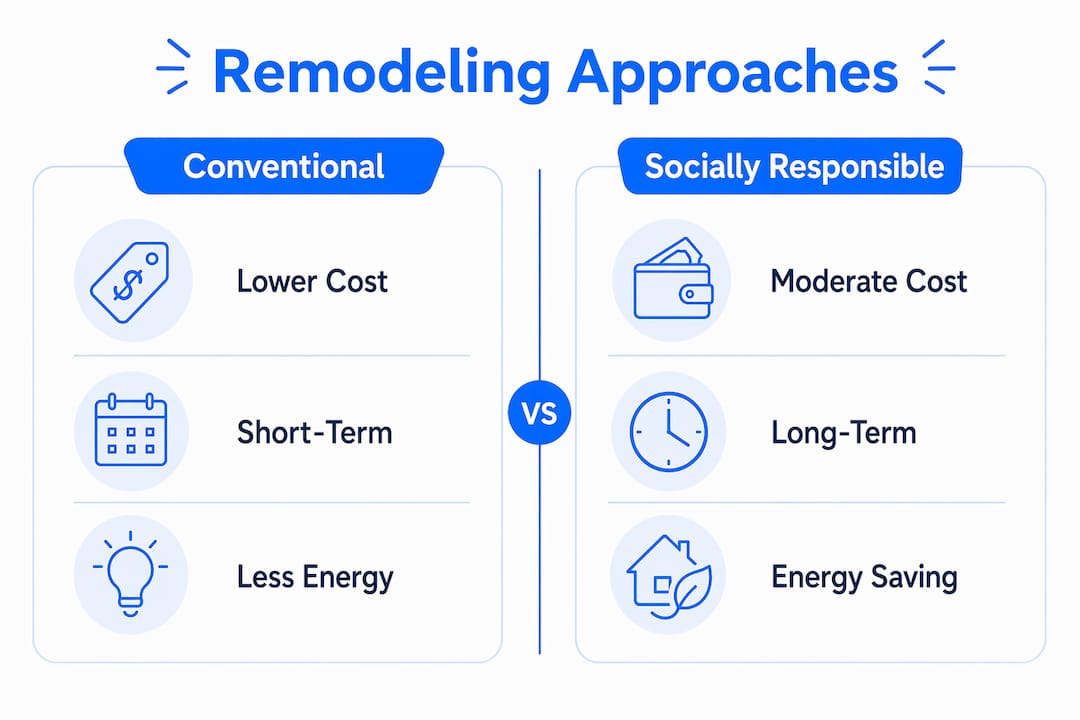
Lifecycle analysis compares the total cost of a material or system over its full useful life, including installation, operation, maintenance, and disposal. A cheap vinyl floor installed in a conventional remodel may need replacement in 8–10 years. A reclaimed hardwood or certified bamboo floor installed responsibly can last 30–50 years with minimal maintenance. The upfront premium disappears when you divide it across decades.
Factor | Conventional remodeling | Socially responsible remodeling |
Upfront cost | Lower | 5–15% higher |
Operating expenses | Standard utility rates | 25–40% lower energy costs |
Environmental impact | High waste, high emissions | Reduced waste, lower emissions |
Indoor health | Variable, often unaddressed | Actively improved |
Resale positioning | Standard market value | Premium for documented performance |
Material lifespan | Shorter average cycles | Longer, certified materials |
Certification adds complexity but also credibility. Passive House retrofit certification, known as EnerPHit, requires detailed planning and integration of mechanical systems like MVHR (mechanical ventilation with heat recovery). Not every project needs that level of rigor. But understanding the certification spectrum helps you set realistic goals and communicate value to future buyers.
Professional energy audits are the starting point that separates effective green remodeling from expensive guesswork. An audit identifies thermal envelope weaknesses, air leakage points, and equipment inefficiencies before you spend a dollar on upgrades. Skipping this step is the single most common planning mistake in responsible remodeling projects.
How to remodel responsibly: a practical implementation guide
Responsible remodeling works best as a structured process, not a collection of individual decisions. Follow these steps to get meaningful results without overextending your budget.
Commission an energy audit. A certified auditor from a program like BPI (Building Performance Institute) maps your home’s energy profile and identifies the upgrades with the highest return. This document becomes your remodeling roadmap.
Set clear sustainability goals. Decide whether your priority is energy savings, indoor air quality, carbon reduction, or resale value. Different goals lead to different upgrade sequences. Aligning your home projects with your values from the start prevents scope creep and budget overruns.
Triage upgrades by impact, not cost. Air sealing and insulation improvements almost always deliver the highest return per dollar spent. Address the thermal envelope before investing in solar or high-efficiency HVAC systems. A well-sealed home needs a smaller, cheaper system to maintain comfort.
Select qualified contractors and certified materials. Look for contractors with experience in ENERGY STAR, LEED, or Passive House standards. Verify that materials carry certifications like FloorScore, GreenGuard Gold, or FSC (Forest Stewardship Council) for wood products.
Document everything. Photograph before-and-after conditions, save all material certifications, and track utility bills before and after each upgrade. Performance documentation is what converts your remodel from a personal improvement into a marketable asset.
Start small if needed. Incremental, budget-conscious improvements deliver meaningful results without requiring a full-scale renovation. Replacing lighting, adding a programmable thermostat, and switching to low-VOC finishes costs a few hundred dollars and produces immediate, measurable benefits.
The goal is not perfection. The goal is a home that performs better, costs less to operate, and supports the health of everyone inside it. You can learn more about planning with purpose to build a remodeling sequence that fits your timeline and budget.
Key takeaways
Socially responsible remodeling delivers financial, health, and community returns that conventional renovation cannot match, making it the stronger long-term investment for homeowners and property investors alike.
Point | Details |
Energy savings are immediate | Sustainable upgrades cut energy use by 25–40%, lowering bills from the first month. |
Resale value increases measurably | Eco-friendly homes command 5–15% higher resale prices when performance is documented. |
Indoor health improves with material choices | Low-VOC paints and formaldehyde-free products reduce toxic exposure for all occupants. |
Start with an energy audit | An audit identifies the highest-impact upgrades before any money is spent on materials. |
Incremental progress counts | Small targeted upgrades deliver real performance gains without requiring a full renovation budget. |
What I have learned after years of responsible remodeling work
Most articles on this topic treat socially responsible remodeling as a premium lifestyle choice for wealthy homeowners. That framing is wrong, and it has done real damage to adoption rates in communities that need these improvements most.
I have worked in facilities management and home improvement long enough to see what happens when a building is neglected: health problems, rising utility costs, and a slow erosion of the occupant’s quality of life. The families I work with through Manycolorswi are not asking for luxury. They are asking for homes that do not make them sick, that do not cost a fortune to heat in a Milwaukee winter, and that hold their value over time.
The ethical case for responsible remodeling is not separate from the financial case. They are the same case. When you install low-VOC finishes, you protect your family and reduce your exposure to liability as a landlord. When you improve insulation and air sealing, you cut utility costs for tenants who are already stretched thin. When you choose deconstruction over demolition, you reduce waste and potentially generate tax benefits.
What I tell every homeowner and investor I work with: do not wait until you can afford the perfect renovation. Small, targeted improvements compound over time, just like interest. The homeowner who seals air leaks this year, adds LED lighting next year, and installs efficient windows the year after that ends up in a far better position than the one waiting for a budget that never quite arrives.
The market is also moving in one direction. Buyers increasingly ask for energy performance data. Lenders are beginning to price green certifications into mortgage products. Cities like Milwaukee are expanding incentive programs for sustainable upgrades. The homeowners and investors who document their improvements now will have a competitive advantage that grows every year.
— Ricco
Work with Manycolorswi on your next responsible remodeling project
Manycolorswi brings a rare combination to every project: hands-on home improvement expertise and a genuine social mission. Founded in Milwaukee to give residents of a homeless shelter real job skills and a path forward, the company delivers flooring, drywall, painting, and lawn care services with a workforce that is trained, motivated, and invested in doing the job right.

If you are ready to explore eco-friendly home remodeling that aligns with your values and your budget, Manycolorswi is the team to call. Every project supports workforce development for individuals who are rebuilding their lives, which means your home improvement investment creates impact far beyond your property line. Visit manycolorswi.com to review the portfolio and schedule a consultation.
FAQ
What is socially responsible remodeling?
Socially responsible remodeling is the practice of renovating homes using eco-friendly materials, ethical labor, and energy-efficient systems. It is also called green remodeling and covers upgrades like low-VOC finishes, solar installations, and deconstruction-based waste reduction.
How much can I save with sustainable home renovation?
Sustainable renovations reduce energy consumption by 25–40% and can save $600–$1,200 per year on energy bills with solar alone. Over a 10-year period, those savings typically exceed the 5–15% upfront cost premium.
Does eco-friendly remodeling increase resale value?
Green remodeling increases resale value by 5–15% when performance improvements are documented. Buyers in 2026 actively seek homes with verified energy data, and documented upgrades shorten listing times.
Where should I start with responsible remodeling?
Start with a professional energy audit from a BPI-certified auditor. The audit identifies your home’s biggest inefficiencies and creates a prioritized upgrade sequence so your first investment delivers the highest return.
Are small upgrades worth doing if I cannot afford a full renovation?
Incremental improvements like LED lighting, low-VOC paint, and air sealing deliver meaningful comfort and cost savings without a large budget. Targeted small upgrades compound over time and build toward a higher-performing home.
Recommended
Comments