
How to Select Inclusive Home Repair Teams in 2026

Selecting inclusive home repair teams means choosing contractors who prioritize diversity, equity, and quality workmanship alongside the technical skills needed to fix your home. These teams are defined by their commitment to hiring across ethnic backgrounds, supporting women-owned and family-owned businesses, and often connecting their work to a broader community mission. Platforms like FiXA and programs like Team Delva Cares have made it easier than ever to find vetted, socially responsible contractors who deliver real results. This article walks you through the criteria, preparation steps, and evaluation process you need to hire with confidence in 2026.
How to select inclusive home repair teams: key criteria
Inclusive home repair teams share several measurable qualities that separate them from standard contractors. Knowing what to look for before you make a single phone call saves time and protects you from costly mistakes.
Diversity and ownership structure are the first signals to check. Women-owned, minority-owned, and family-owned businesses are more likely to reflect the communities they serve, and many carry certifications that verify this status. FiXA, a Philadelphia-based contractor network launched in March 2026, verifies women-owned and family-owned status before adding any contractor to its platform. That verification step matters because it removes guesswork from your research.

Community involvement is the second marker. Teams connected to local nonprofits, workforce development programs, or social missions tend to hold themselves to a higher standard of accountability. Manycolorswi, for example, was founded specifically to train and employ residents of a Milwaukee homeless shelter, embedding social responsibility directly into every job.
Licensing, insurance, and documentation are non-negotiable. Clear documentation verified across repair phases keeps insurance claims smooth and reduces disputes. Ask every contractor for proof of active licensing and current general liability insurance before any work begins.
Here is what to confirm during your initial screening:
Verified ownership status (women-owned, minority-owned, or family-owned certification)
Active state contractor license and general liability insurance
Written scope of work and project timeline
References from at least three past clients
Demonstrated community ties or social mission alignment
Pro Tip: Ask contractors directly: “Do you have experience with accessibility modifications or repairs for clients with specific needs?” Inclusive teams will answer this question confidently and specifically.
What you need before hiring an inclusive team
Preparation determines how smoothly the hiring process goes. Arriving at the conversation without a clear picture of your repair needs puts you at a disadvantage and makes it harder to evaluate whether a contractor is the right fit.
Start by documenting the problem thoroughly. Take photos from multiple angles, note when the issue started, and write a short description of what you have already tried. This gives contractors enough context to provide accurate quotes and prevents scope creep later.
Next, set a realistic budget. Grant programs in cities like Minneapolis and Hamden offer up to $25,000 for critical repairs targeting low-income homeowners. If you qualify, these funds can expand your options significantly and allow you to prioritize quality over the lowest bid. Research what programs exist in your city before assuming you must cover all costs out of pocket.
Community-based repair groups are another resource worth investigating. Rebuilding Together Miami-Dade uses 25-point safety checklists and provides free roof replacements, plumbing, electrical work, and ADA modifications for qualifying homeowners. Knowing these options exist changes how you approach budget planning entirely.
Preparation step | Tool or resource |
Document repair needs | Photos, written description, measurements |
Assess your budget | Local grant programs, CDFI funds |
Research community programs | Rebuilding Together, Team Delva Cares |
Identify inclusive contractor networks | FiXA platform, Manycolorswi |
Prepare reference questions | List of 5 to 7 specific vetting questions |
Step-by-step process to evaluate and hire
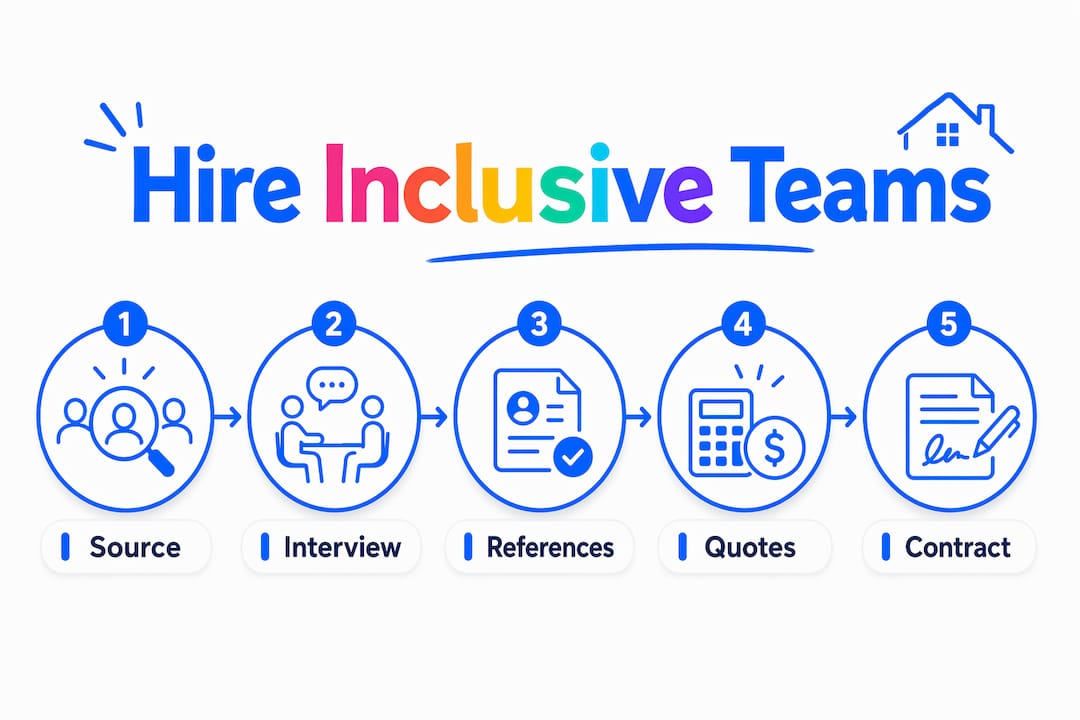
Once you are prepared, the evaluation process follows a clear sequence. Skipping steps here is where most homeowners run into problems.
Step 1: Source candidates from vetted networks. Start with platforms or programs that already screen for inclusivity. FiXA interviews every contractor, calls three references, and verifies licenses and insurance before listing them. Team Delva Cares has completed over 400 repairs at no cost to more than 150 families, demonstrating a track record that speaks for itself. Starting with pre-screened sources cuts your vetting time in half.
Step 2: Conduct a structured interview. Ask each candidate about their hiring practices, their experience with clients from different backgrounds, and how they handle communication when problems arise. Inclusive teams will describe specific practices, not vague commitments.
Step 3: Call references with targeted questions. Ask references whether the team communicated clearly, respected the household, and handled unexpected issues professionally. Asking about inclusive scope specifically, such as accessibility builds or work in multilingual households, reveals whether inclusivity is genuine or just marketing language.
Step 4: Compare quotes on equal terms. Request itemized quotes from at least three contractors. Compare line by line: materials, labor, timeline, and warranty terms. The lowest number rarely tells the full story.
Step 5: Negotiate and document everything. Agree on a written contract that covers scope, payment schedule, timeline, and change-order procedures. Home repair timeline clarity protects both parties and keeps insurance claims straightforward if damage occurs during the project.
Evaluation factor | What to look for |
Contractor vetting source | Pre-screened network vs. unverified listing |
Interview responses | Specific practices vs. general statements |
Reference quality | Inclusive scope experience confirmed |
Quote structure | Itemized vs. lump sum |
Contract terms | Written scope, timeline, and change-order clause |
Pro Tip: Request a sample contract before signing anything. Contractors who hesitate to share one before you commit are signaling that their documentation practices need work.
Common mistakes to avoid when choosing repair teams
Even well-intentioned homeowners make avoidable errors when hiring contractors. Recognizing these patterns before they happen protects your investment and your relationship with the team.
Skipping insurance verification. A contractor without current general liability insurance leaves you financially exposed if a worker is injured on your property. Verify the certificate directly with the insurer, not just by reading a document the contractor hands you.
Mistaking diversity marketing for genuine inclusivity. Some contractors list diversity credentials without any operational commitment behind them. Look for concrete evidence: workforce composition, community partnerships, or third-party certification.
Setting vague expectations. Undefined timelines and undocumented scope changes are the leading cause of contractor disputes. Every agreement should be in writing before work starts.
Ignoring communication style during the interview. FiXA specifically targets women and immigrants who report less anxiety when working with inclusive contractors. If a contractor dismisses your questions or speaks over you during the interview, that behavior will not improve once they are on your property.
Choosing based on price alone. Affordable home repair options exist through grants and community programs, but cutting corners on vetting to save money on labor almost always costs more in the long run.
“The goal is not just to find someone who can do the work. It is to find someone who will do it with respect, transparency, and accountability.” This standard applies whether you are hiring for a single room or a full renovation.
When problems do arise during a project, address them in writing immediately. Document the issue with photos, reference the original contract, and give the contractor a specific deadline to respond. Community-based repair groups often have mediation resources available if a dispute escalates.
Key takeaways
Selecting inclusive home repair teams requires verifying diversity credentials, confirming active licensing and insurance, and using structured vetting steps before signing any contract.
Point | Details |
Verify ownership and credentials | Confirm women-owned, minority-owned, or family-owned status through certification, not self-reporting. |
Use pre-screened networks | Platforms like FiXA and programs like Team Delva Cares reduce vetting time with built-in contractor checks. |
Prepare before outreach | Document repair needs, research local grants, and set a budget before contacting any contractor. |
Document everything in writing | Written contracts with scope, timeline, and change-order terms prevent disputes and protect insurance claims. |
Assess genuine inclusivity | Look for workforce composition, community partnerships, and specific inclusive scope experience, not just marketing language. |
Why I changed how I hire after building this team
I spent years in facilities management before founding Manycolorswi, and I will be honest: I used to hire based almost entirely on speed and price. That approach worked until it did not. The jobs that went sideways almost always traced back to a contractor who had no real accountability to anyone in the community.
When I started building the Many Colors team from people who had been overlooked by the traditional workforce, I expected to have to defend that decision constantly. What I found instead was that clients noticed the difference immediately. Not because the workers were trying harder to prove themselves, though many were. Because they communicated better, showed up consistently, and treated every home like it mattered.
The uncomfortable truth about hiring for inclusivity is that it forces you to slow down the vetting process. You cannot just grab the first name off a search result. You have to ask harder questions, check references more carefully, and think about whether the team’s values actually match what they say. That extra effort pays off in fewer disputes, better work, and a contractor relationship built on mutual respect.
I also want to address the cost concern directly. Inclusive teams are not automatically more expensive. Home repair companies with social missions often operate leaner and invest more in workforce training than in marketing. What you pay for is reliability and accountability, and that is worth every dollar.
My advice: treat the vetting process as seriously as you treat the repair itself. The team you choose reflects the values you bring to your home and your community.
— Ricco
How Manycolorswi connects you with inclusive repair professionals
Manycolorswi was built on the belief that quality home repair and social responsibility belong together. Every member of the Many Colors team has been trained and supported through a program designed to give overlooked individuals a real path forward, and that commitment shows in the work.

Whether you need flooring, drywall, painting, or lawn care, the Many Colors team brings verified skills and a genuine community mission to every project. If you are ready to work with a team that takes both craftsmanship and accountability seriously, visit Many Colors to learn more about available services and get started. You can also explore home improvement community impact to see how projects like these strengthen neighborhoods beyond the individual home.
FAQ
What makes a home repair team inclusive?
An inclusive home repair team actively hires across ethnic backgrounds, supports women-owned or minority-owned business structures, and maintains transparent communication practices. Platforms like FiXA verify these qualities through contractor interviews, reference checks, and license confirmation before listing any team.
How do I verify a contractor’s inclusivity credentials?
Ask for third-party certification of ownership status, request references from clients with similar backgrounds or accessibility needs, and confirm active licensing and insurance directly with the issuing authority. Self-reported diversity claims without documentation carry little weight.
Are inclusive home repair services more expensive?
Not necessarily. Many inclusive teams operate through community programs or workforce development organizations that keep overhead low. Grant programs through organizations like Rebuilding Together Miami-Dade and CDFI funds in cities like Minneapolis can also offset repair costs significantly for qualifying homeowners.
What should I include in a home repair contract?
Every contract should include a written scope of work, itemized cost breakdown, project timeline, payment schedule, and a change-order clause. Documented repair timelines reduce disputes and keep insurance claims straightforward if unexpected damage occurs.
Where can I find vetted inclusive repair teams near me?
Start with pre-screened platforms like FiXA, which launched in March 2026 and serves multiple counties with plans to expand to Boston and Baltimore. Community programs like Team Delva Cares and Rebuilding Together Miami-Dade also connect homeowners with vetted, mission-driven contractors at low or no cost.
Recommended
Comments