
How to Start a Career in Home Repair Today
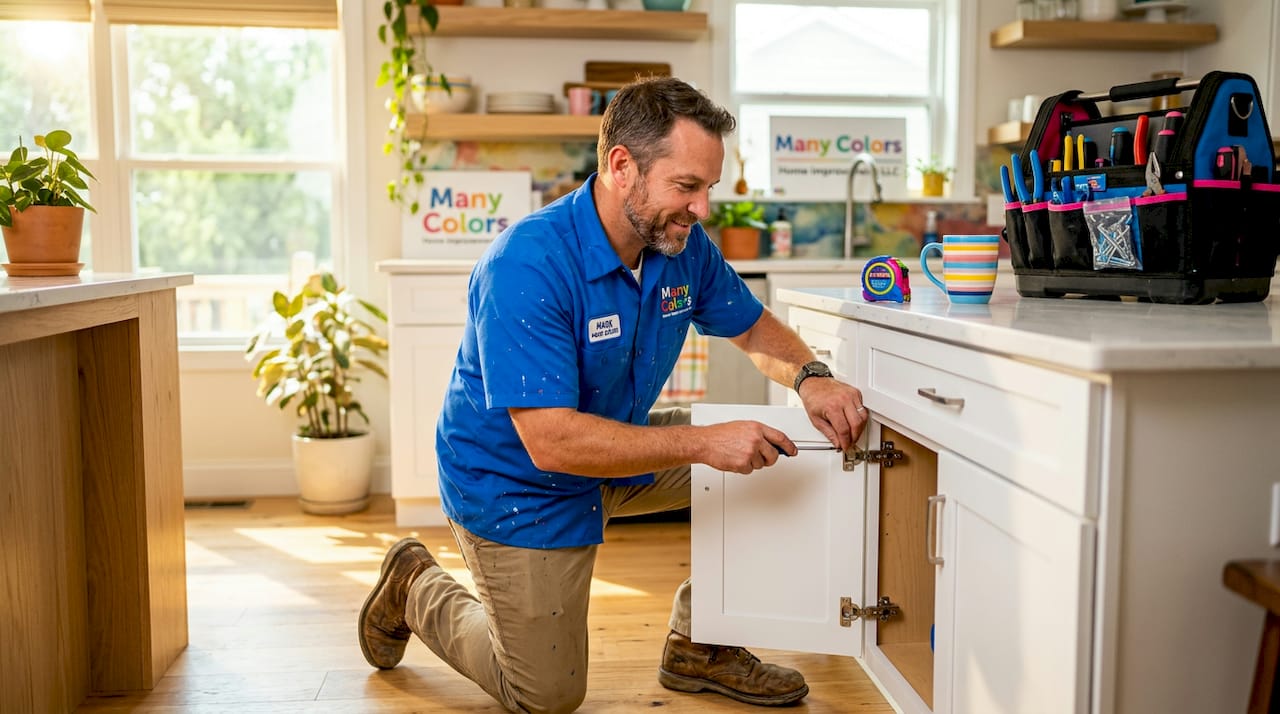
If you want to start a career in home repair, you are stepping into one of the most stable and accessible fields in the trades. The U.S. home repair market generates over $500 billion annually, and demand keeps climbing as the housing stock ages and skilled workers retire. You do not need a four-year degree, a trust fund, or years of prior experience to get started. What you do need is a clear plan, the right foundational skills, and an honest understanding of what the licensing and business side actually requires.
Table of Contents
Key takeaways
Point | Details |
Demand is strong and growing | The home repair market tops $500B annually, giving newcomers real job security from day one. |
Skills before scale | Build core trade skills and earn safety certifications before taking on complex or high-value jobs. |
Licensing varies by state | Handyman work and specialty trades have different legal thresholds. Know your state’s rules before you price a job. |
Specialization pays more | Focusing on one or two repeatable services builds expertise faster and commands higher rates. |
Professionalism wins clients | Reliability and clear communication matter more than offering the lowest price when building a reputation. |
Skills needed for home repair: where to start
You do not need to master every trade on day one. What you need is a working knowledge of several core areas and deep competence in at least one.
The non-negotiable foundation skills include:
Basic math and measurement. Reading a tape measure accurately, calculating square footage for flooring or drywall, and estimating material quantities are daily tasks. Mistakes here cost money and time.
Plumbing basics. Fixing leaky faucets, replacing shutoff valves, and clearing drain clogs are among the most requested handyman services. You do not need a plumber’s license for minor repairs in most states, but you need to know what you are doing.
Carpentry and drywall. Patching holes, hanging doors, installing trim, and replacing damaged drywall panels are high-frequency jobs. These skills are learnable quickly and carry low liability risk for beginners.
Painting. Interior and exterior painting is one of the best trades for beginners. Low startup cost, high demand, and a clear path from helper to lead painter.
Electrical and HVAC basics. Replacing outlets, switches, and light fixtures falls within handyman territory in many states. Full panel work and HVAC installation do not. Knowing where that line sits protects you legally.
Vocational training programs at community colleges typically run six months to two years and cover multiple trades in a structured format. Apprenticeship programs are another strong path. Flexible, well-paid apprenticeships have been launched specifically to address skilled trade shortages, and they let you earn while you learn.
Pro Tip: Before enrolling in any program, check whether it prepares you for OSHA 10 certification. Safety certifications like OSHA 10 and EPA 608 are career accelerators and often required for entry-level technician positions in HVAC and building maintenance.
Licensing, permits, and legal requirements
This is where many people who want to become a home repair technician get tripped up. The rules are not uniform, and assuming you are covered when you are not can cost you your business.
Here is a practical breakdown of how licensing typically works:
Work type | License usually required | Notes |
General handyman tasks | No (in most states) | Job value thresholds apply |
Electrical work (full circuits) | Yes | Separate trade license needed |
Plumbing (new lines or permits) | Yes | State-specific requirements |
HVAC installation | Yes | EPA 608 certification required |
Contractor work above threshold | Yes | California triggers at $1,000 labor and materials |
The critical distinction is this: a handyman license does not cover specialized trades. Performing regulated work without the correct license risks legal penalties and can shut your business down entirely. Many beginners discover this the hard way after taking on a job that crosses a licensing threshold they did not know existed.
Specialty contractor licensing in states like Utah and California requires more than just paying a fee. Licensing includes passing trade exams, proof of insurance, bonding, and verified field experience. Some states also require detailed experience documentation such as tax returns and notarized affidavits from past employers or clients.
“The single best move you can make before pricing your first job is calling your state contractor licensing board and asking exactly which tasks require a license in your county. Fifteen minutes on the phone can save you from a $10,000 fine.”
For insurance, you need at minimum a general liability policy. Most clients will ask for a certificate of insurance before letting you work in their home. Bonding adds another layer of protection and signals professionalism to potential clients.
How to gain hands-on experience fast
Reading about home repair and actually doing it are two different things. Here is a structured approach to building real competence without taking on jobs beyond your current ability.
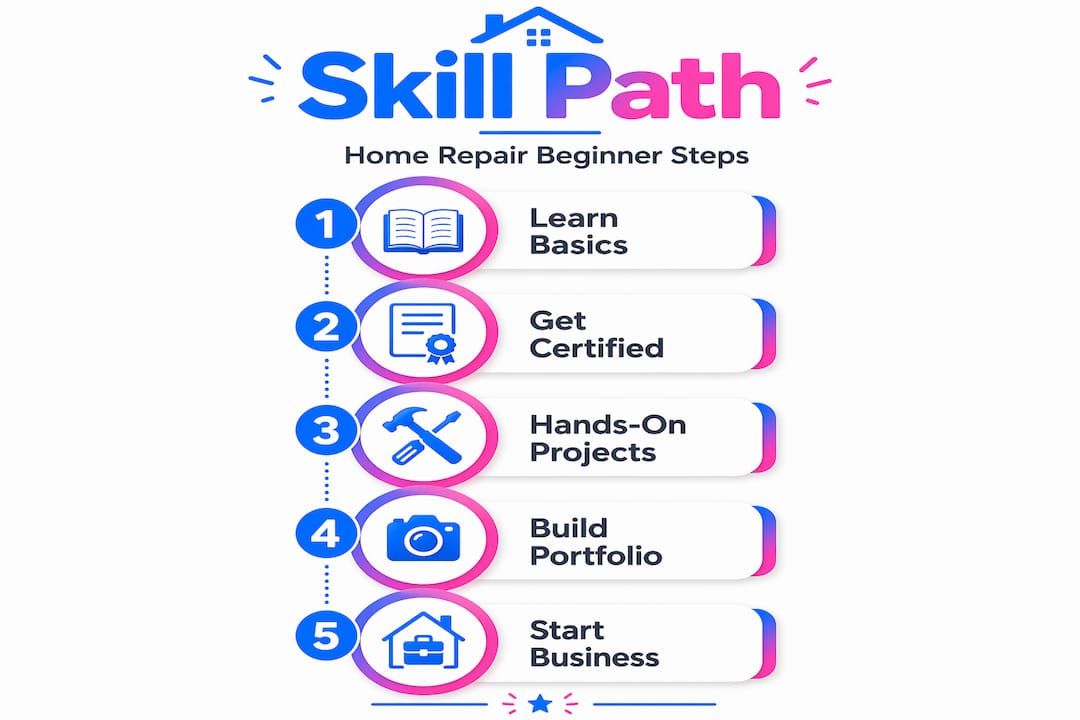
Start with your own space. Patch drywall in your own home, replace a faucet, repaint a room. These low-stakes projects teach you to work cleanly and efficiently before a client is watching.
Take community college courses. Many offer evening and weekend trades programs specifically designed for working adults. These courses provide structured instruction and often include lab time with actual materials.
Shadow an experienced professional. Reach out to local contractors or handymen and offer to assist on jobs in exchange for learning. Most experienced tradespeople remember what it was like to start and will take on a motivated helper.
Volunteer on community projects. Organizations like Habitat for Humanity run regular build days where you can practice framing, painting, flooring, and more under supervision.
Document everything. Take before-and-after photos of every project, no matter how small. This becomes your portfolio, and a portfolio is what turns a stranger into a paying client.
Pro Tip: Regular maintenance reduces long-term repair costs by about 30%. When you understand this principle, you can offer clients a maintenance walkthrough as part of your service. It builds trust and creates repeat business without any extra selling.
Building a portfolio does not require dozens of completed jobs. Five well-documented projects with clear photos and a written reference from the homeowner are enough to get your first paying clients. Ask every satisfied customer for a Google review. Those reviews do more marketing work than any flyer.

Starting a home repair business: setup and marketing
When you are ready to move from learning to earning, the business setup process is more straightforward than most people expect. Here is what actually matters.
Choose your service scope first. Specialization correlates with higher customer retention and better profit margins. A technician known for excellent drywall and painting work will outperform a generalist who does everything poorly. Pick two or three services you do well and build your reputation there before expanding.
Handle the business basics:
Register your business name with your state (LLC is the most common structure for solo operators)
Open a dedicated business checking account
Set up simple bookkeeping from day one using a spreadsheet or basic accounting software
Get a general liability insurance policy before taking any paid work
Pricing your work is where beginners consistently undercharge. Research what local competitors charge for the same services. Factor in your material costs, drive time, and the time to quote and follow up. A flat-rate pricing model works better than hourly for most handyman services because clients know exactly what they are paying.
For marketing, the highest-return activities for a new home repair business are:
Creating a Google Business Profile (free, and it shows up in local search results)
Asking every completed client for a review
Listing your services on neighborhood apps and local Facebook groups
Building a simple one-page website with your services, service area, and contact information
Reliability and professionalism consistently outperform low pricing when it comes to building a client base. Show up on time, give clear written estimates, and follow up after the job. That alone will put you ahead of most of your competition.
As your business grows, consider offering subscription home-care memberships where clients pay a monthly or annual fee for regular maintenance visits. This creates predictable income and keeps you top of mind when bigger jobs come up.
Common mistakes that derail beginners
Most early failures in home repair careers come down to a short list of avoidable errors. Using improper tools and ignoring licensing requirements are the two most common causes of repeat failures and legal trouble for new technicians.
Watch out for these specific pitfalls:
Buying cheap tools. A $15 drill bit set will strip screws, break mid-job, and cost you more in time and frustration than a quality set would have. Invest in a small kit of reliable tools rather than a large kit of unreliable ones.
Taking jobs outside your skill level. Saying yes to everything feels like good business early on. It is not. One botched electrical job or a plumbing mistake that floods a basement can wipe out months of reputation building.
Skipping written contracts. Even a simple one-page agreement that lists the scope, price, and timeline protects both you and the client. Verbal agreements lead to disputes.
Ignoring safety protocols. Falls from ladders and improper handling of electrical components are leading causes of injury for tradespeople. OSHA 10 training exists for a reason.
Poor communication. Clients who do not hear from you assume the worst. Send a quick message when you are on your way, when you finish for the day, and when the job is complete.
One underrated risk is liability exposure from unlicensed work. If something goes wrong on a job you were not legally authorized to perform, your general liability insurance may not cover the claim.
My honest take on launching a home repair career
I have worked in facilities management and home improvement long enough to know that the people who succeed in this field are not always the most technically gifted. They are the most reliable.
What I have seen consistently is that newcomers who try to be everything to every client burn out fast and build shaky reputations. The ones who pick a specialty, get genuinely good at it, and treat every client interaction like a professional transaction build something real. In my experience, a painter who shows up on time, leaves a clean workspace, and follows up with a thank-you message will get more referrals than a skilled carpenter who communicates poorly.
The balance between learning and earning is real, and it is worth taking seriously. Do not wait until you feel completely ready. You will learn more in your first ten paid jobs than in any classroom. But do not take on jobs that require licenses you do not have or skills you have not practiced. That is not caution. That is protecting the career you are building.
The long-term opportunity here is significant. Skilled trades are facing a genuine shortage, and home repair job opportunities will only grow as the workforce ages. If you approach this with professionalism and a commitment to continuous learning, you are not just getting a job. You are building a career with real staying power.
— Ricco
Ready to start your home repair career with real support?
If you are serious about making the move into home repair, having the right community and resources behind you makes a real difference. Manycolorswi was built specifically for people who are ready to work hard and need a real starting point.

At Manycolorswi, the focus is on giving motivated individuals the training, hands-on experience, and professional environment they need to launch careers in flooring, drywall, painting, and more. This is not a generic job board. It is a team built around the belief that the right opportunity changes everything. If you are ready to take the first concrete step toward a home repair career, explore what Manycolorswi has to offer and connect with a team that is genuinely invested in your success.
FAQ
How do I start a career in home repair with no experience?
Begin with low-risk tasks like painting, drywall patching, and basic carpentry on your own home or through volunteer programs. Community college vocational courses and apprenticeships are structured ways to build foundational skills before taking paid work.
What licenses do I need to become a home repair technician?
Licensing requirements vary by state and by the type of work you perform. General handyman tasks typically require no license, but electrical, plumbing, and HVAC work usually require separate trade licenses, especially above certain job value thresholds.
How much can you earn starting a home repair business?
Entry-level handyman work has low startup costs, while specialized trades can yield $300 to $2,000 or more per visit. Earnings grow significantly as you build a reputation, specialize, and add recurring maintenance clients.
What are the best trades for beginners in home repair?
Painting, drywall repair, and basic carpentry are the best trades for beginners because they require lower startup investment, carry manageable liability, and have consistent demand in nearly every market.
Do I need insurance before taking home repair jobs?
Yes. A general liability insurance policy protects you if something goes wrong on a job and is required by most clients before they allow work in their home. Bonding is also recommended and signals professionalism to potential clients.
Recommended
Comments